
JEE Main 2026 Jan 24 Shift 1, Chemistry Q17: Resonance & Mesomeric Effect
Given below are two statements :
Statement I : 'C–Cl' bond is stronger in than
Statement II : The given optically active molecule, 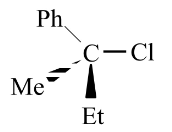 on hydrolysis gives a solution that can rotate the plane polarized light.
In the light of the above statements, choose the correct answer from the options given below
- A
Statement I is false but Statement II is true
- B
Both Statement I and Statement II are true
- C
Both Statement I and Statement II are false
- D
Statement I is true but Statement II is false
Statement I: In vinyl chloride (), the lone pair on Cl conjugates with the -system of the double bond, giving the C–Cl bond partial double-bond character. This makes it shorter and stronger than the C–Cl bond in ethyl chloride (). True.
Statement II: The chiral alkyl halide shown undergoes hydrolysis via a planar carbocation intermediate, which is attacked equally from either face by water. This produces equal amounts of the two enantiomeric alcohols — a racemic mixture, which is optically inactive (cannot rotate plane-polarised light). False.
Statement I is true but Statement II is false.
Concept behind this question
Resonance & Mesomeric EffectNotes, formulas and examples →More previous year questions on Resonance & Mesomeric Effect
Practice more Chemistry
Concept-wise practice with instant solutions on Fundamenthol.
Start practicing →