
JEE Main 2025 Apr 8 Shift 2, Chemistry Q18: Properties and Important Reactions of Aldehydes & Ketones
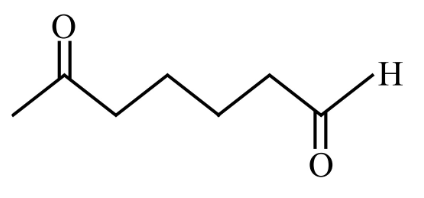
When the following keto-aldehyde undergoes intramolecular aldol condensation, the major product formed is:
- A
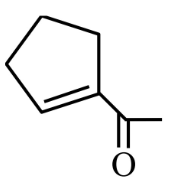
- B
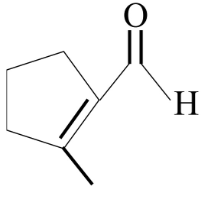
- C
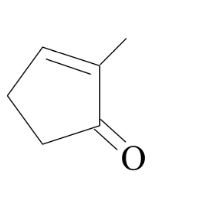
- D
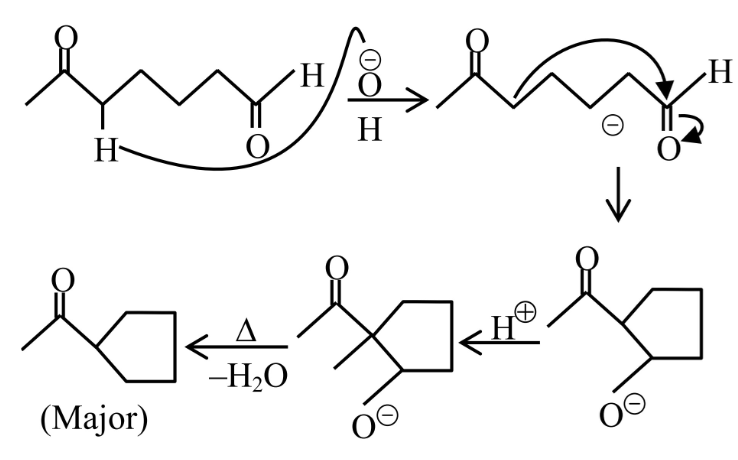
Step 1: Enolate Formation
In the presence of a base, the acidic -hydrogen adjacent to a carbonyl group is removed, forming a resonance-stabilised enolate ion.
Step 2: Intramolecular Aldol Cyclisation
The enolate carbon attacks the second carbonyl carbon within the same molecule, forming a new C–C bond and closing the ring.
Five- and six-membered rings are preferred because they have minimum ring strain.
Step 3: Dehydration
The initially formed -hydroxy carbonyl compound readily loses water to form a thermodynamically stable conjugated enone.
Conclusion
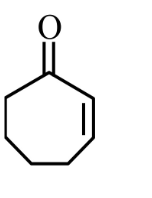
The reaction proceeds through the favourable ring-size pathway to give the fused-ring conjugated enone shown in Option (1).
Concept behind this question
Properties and Important Reactions of Aldehydes & Ketones Notes, formulas and examples →More previous year questions on Properties and Important Reactions of Aldehydes & Ketones
Practice more Chemistry
Concept-wise practice with instant solutions on Fundamenthol.
Start practicing →