
JEE Advanced 2023 Paper 2, Chemistry Section 1 Q4: Carbohydrates
A disaccharide X cannot be oxidised by bromine water. The acid hydrolysis of X leads to a laevorotatory solution. The disaccharide X is
- A
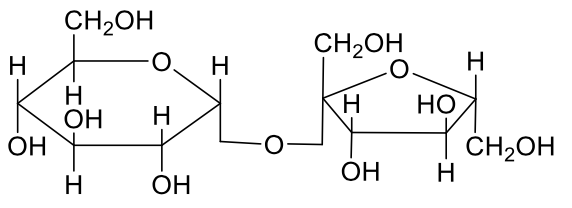
- B
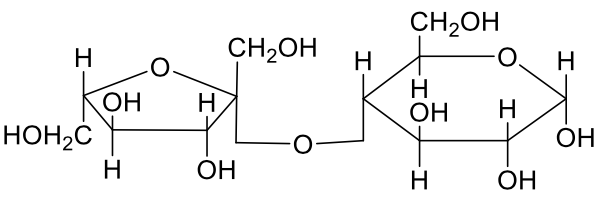
- C
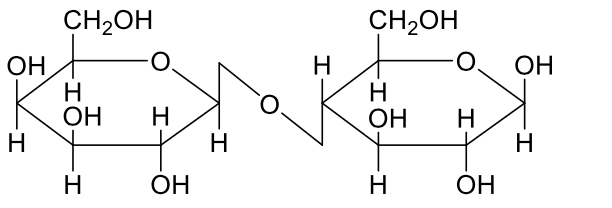
- D
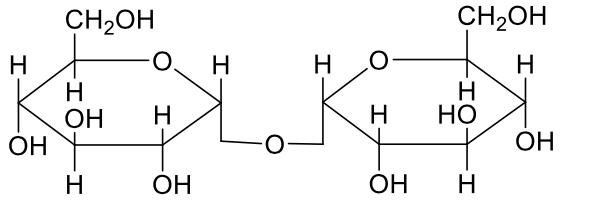
Two pieces of information identify .
(i) No reaction with bromine water. Bromine water oxidises the free aldehyde group present in reducing sugars. A disaccharide that is not oxidised must have no free anomeric hydroxyl, i.e. both anomeric carbons are engaged in the glycosidic linkage. Sucrose (-D-glucopyranosyl---D-fructofuranoside) satisfies this.
(ii) Acid hydrolysis gives a laevorotatory mixture. Sucrose () hydrolyses to an equimolar mixture of D-glucose () and D-fructose (). The net rotation of the mixture (invert sugar) is negative.
Both clues uniquely identify the structure as sucrose, which is option (A). Options (B), (C), and (D) all contain a free anomeric -OH and are therefore reducing sugars that would be oxidised by bromine water.
Concept behind this question
CarbohydratesNotes, formulas and examples →More previous year questions on Carbohydrates
Practice more Chemistry Section 1
Concept-wise practice with instant solutions on Fundamenthol.
Start practicing →