
JEE Advanced 2022 Paper 1, Chemistry Section 3 Q4: Analysis of Amines
Match the compounds in LIST-I with the observations in LIST-II, and choose the correct option.
| LIST-I | LIST-II |
|---|---|
| (I) Aniline | (P) Sodium fusion extract of the compound on boiling with FeSO, followed by acidification with conc. HSO, gives Prussian blue color. |
| (II) o-Cresol | (Q) Sodium fusion extract of the compound on treatment with sodium nitroprusside gives blood red color. |
| (III) Cysteine | (R) Addition of the compound to a saturated solution of NaHCO results in effervescence. |
| (IV) Caprolactam | (S) The compound reacts with bromine water to give a white precipitate. |
| (T) Treating the compound with neutral FeCl solution produces violet color. |
- A
I P, Q; II S; III Q, R; IV P
- B
I P; II R, S; III R; IV Q, S
- C
I Q, S; II P, T; III P; IV S
- D
I P, S; II T; III Q, R; IV P
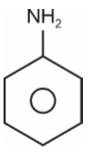
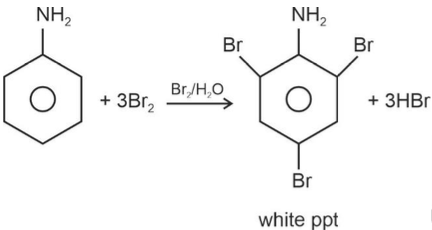
(I) Aniline (CHNH): contains nitrogen, so the Lassaigne sodium fusion test gives the Prussian blue colour with FeSO and conc. HSO (P). Aniline also reacts readily with bromine water at the ortho and para positions to give 2,4,6-tribromoaniline as a white precipitate (S).
(II) o-Cresol (2-methylphenol):
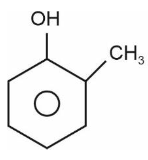
Being a phenol, it gives a characteristic violet colour with neutral FeCl (T).
(III) Cysteine:
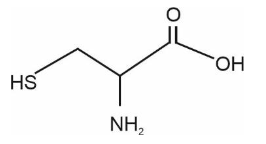
It contains both nitrogen and sulphur. The sodium fusion extract contains sulphide (from S) which gives a blood-red colour with sodium nitroprusside (Q). It also has a –COOH group, so it gives effervescence with saturated NaHCO as CO is released (R).
(IV) Caprolactam:
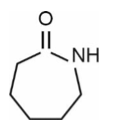
It is a cyclic amide containing nitrogen. Its sodium fusion extract gives cyanide which, with FeSO followed by conc. HSO acidification, produces the Prussian blue colour (P).
The correct matching is option (D).
Concept behind this question
Analysis of AminesNotes, formulas and examples →More previous year questions on Analysis of Amines
Practice more Chemistry Section 3
Concept-wise practice with instant solutions on Fundamenthol.
Start practicing →