
JEE Main 2025 Apr 7 Shift 2, Chemistry Q2: Introduction to Mechanism of Organic Reaction
Mixture of 1 g each of chlorobenzene, aniline and benzoic acid is dissolved in 50 mL ethyl acetate and placed in a separating funnel, 5 M NaOH (30 mL) was added in the same funnel. The funnel was shaken vigorously and then kept aside. The ethyl acetate layer in the funnel contains :
- A
benzoic acid
- B
benzoic acid and aniline
- C
benzoic acid and chlorobenzene
- D
chlorobenzene and aniline
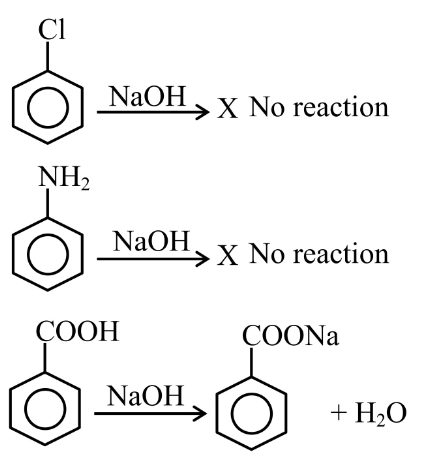
Aqueous NaOH is strong enough to deprotonate benzoic acid into sodium benzoate, which is ionic and dissolves preferentially in the aqueous layer, leaving the organic layer.
Chlorobenzene is an unreactive aryl halide under these mild basic conditions; nucleophilic substitution on an aryl halide needs much harsher conditions, so it is unaffected by NaOH and remains dissolved in ethyl acetate.
Aniline is a very weak base and does not get reacted by NaOH; being non-polar, it also stays in the organic layer.
The ethyl acetate layer retains chlorobenzene and aniline, while benzoic acid is removed into the aqueous phase as its sodium salt.
Concept behind this question
Introduction to Mechanism of Organic Reaction Notes, formulas and examples →More previous year questions on Introduction to Mechanism of Organic Reaction
Practice more Chemistry
Concept-wise practice with instant solutions on Fundamenthol.
Start practicing →