
JEE Main 2025 Jan 24 Shift 1, Chemistry Q16: Mechanism of Some Important Reactions of Alkenes
Aman has been asked to synthesise the molecule
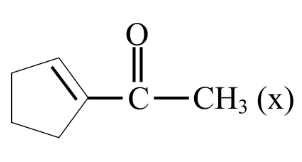
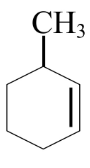
He thought of preparing the molecule using an aldol condensation reaction. He found a few cyclic alkenes in his laboratory. He thought of performing ozonolysis reaction on alkene to produce a dicarbonyl compound followed by aldol reaction to prepare "x". Predict the suitable alkene that can lead to the formation of "x".
- A
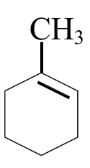
- B
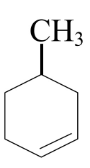
- C
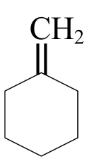
- D
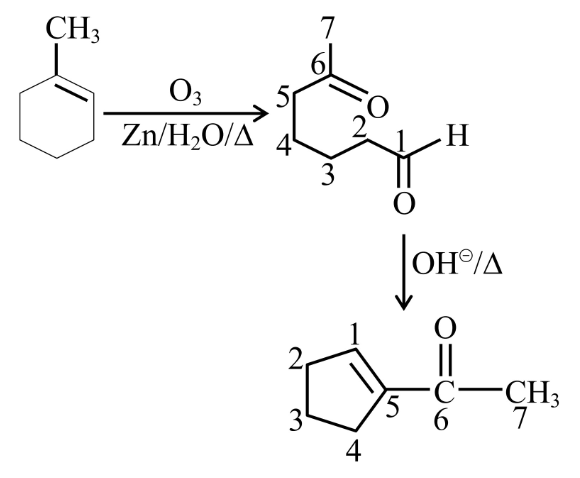
Work the synthesis backwards from the target. The product is acetyl-cyclopentane (a five-membered ring bearing a COCH group), made by an intramolecular aldol condensation. The aldol precursor must be an open-chain dicarbonyl whose two carbonyls, after enolisation and ring closure, leave a five-membered ring carrying an acetyl side chain.
The required dicarbonyl is a 1,6-diketo/keto-aldehyde with seven carbons in total: CH-CO-(CH)-CHO. An intramolecular aldol between the methyl ketone enolate and the aldehyde, followed by dehydration, would give the cyclopentene; reduction of the C=C (or recognising the aldol product itself) ultimately gives 1-acetylcyclopentane.
Ozonolysis (O, then Zn/HO) cleaves a C=C and places C=O on each former alkene carbon. To get the seven-carbon , cleave a six-membered ring whose double bond is between (i) a carbon bearing a methyl substituent and (ii) an unsubstituted CH. That alkene is 1-methylcyclohex-1-ene.
Cleavage of 1-methylcyclohex-1-ene gives the keto-aldehyde directly; intramolecular aldol then yields the acetylcyclopentane target.
Option (1).
Concept behind this question
Mechanism of Some Important Reactions of AlkenesNotes, formulas and examples →More previous year questions on Mechanism of Some Important Reactions of Alkenes
Practice more Chemistry
Concept-wise practice with instant solutions on Fundamenthol.
Start practicing →